
How to Buy a Google Knowledge Panel: Service Costs and Process Explained
Last updated: October 2026
Services that create a Google Knowledge Panel typically cost between $150 and $500, with our specific service priced at a flat $150. These providers do not buy the panel from Google. Instead, they perform the technical work of creating and linking structured data that triggers Google's algorithm to generate a panel for your name or brand.
Success depends on the provider's method and your existing digital footprint. While you can "earn" a panel organically over time, a service accelerates this process.
Key Takeaways
- Understand the Mechanism: You are not buying a product from Google. You are paying for a service that creates the specific data signals Google's algorithm looks for to generate a panel.
- Vet Your Provider: Success hinges on the provider's methods. High-quality services use authoritative data sources like Wikidata and proper Schema markup, not spammy tactics.
- Set Realistic Expectations: A purchased panel is a starting point. It provides a foundation of digital authority that you must maintain and build upon. Google can edit or remove it.
- Claim Your Panel: Once the panel is live, you must claim it through Google's verification process. This allows you to suggest edits and manage the information it displays.
- Cost Reflects Labor: Prices, typically in the $150-$500 range, reflect the technical labor of data sourcing, structuring, and submission, not a fee paid to Google.
What Does It Mean to "Buy" a Knowledge Panel?
When you buy a Google Knowledge Panel service, you are not engaging in a transaction with Google. Google does not sell Knowledge Panels. Instead, you are hiring a specialist to create and arrange public information in a way that meets Google's criteria for generating one automatically.
A Knowledge Panel is an automated summary of information about a person, place, organization, or thing. Google's Knowledge Graph, a vast database of facts and their relationships, powers these panels. The system's goal is to provide quick, factual answers within search results.
Providers achieve this by performing several technical tasks:
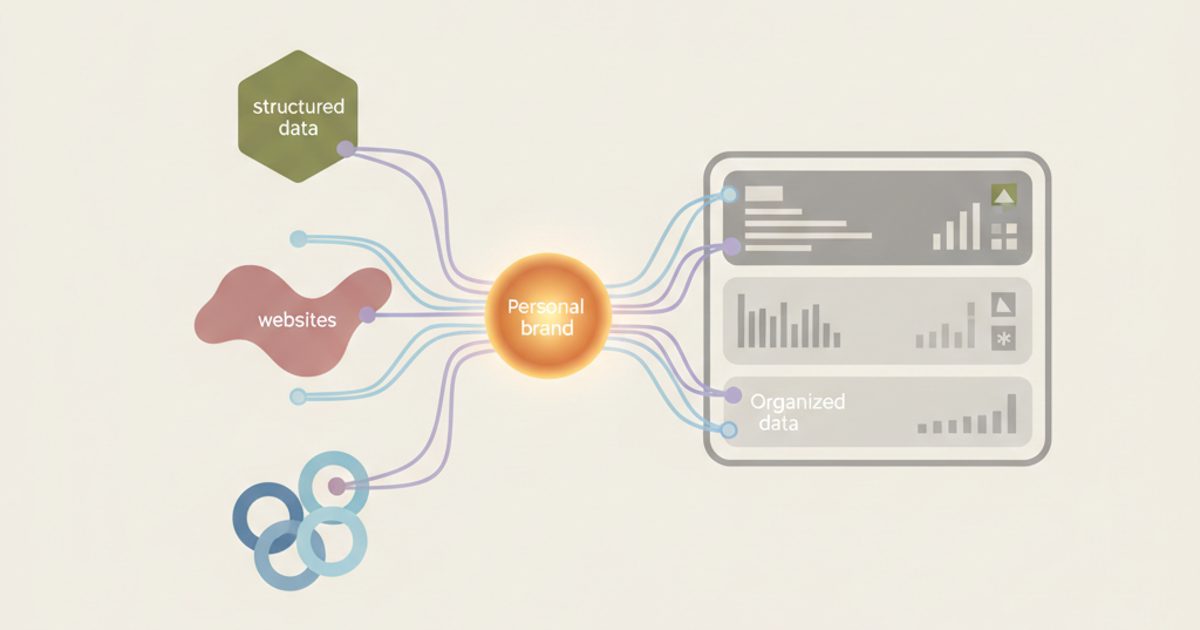
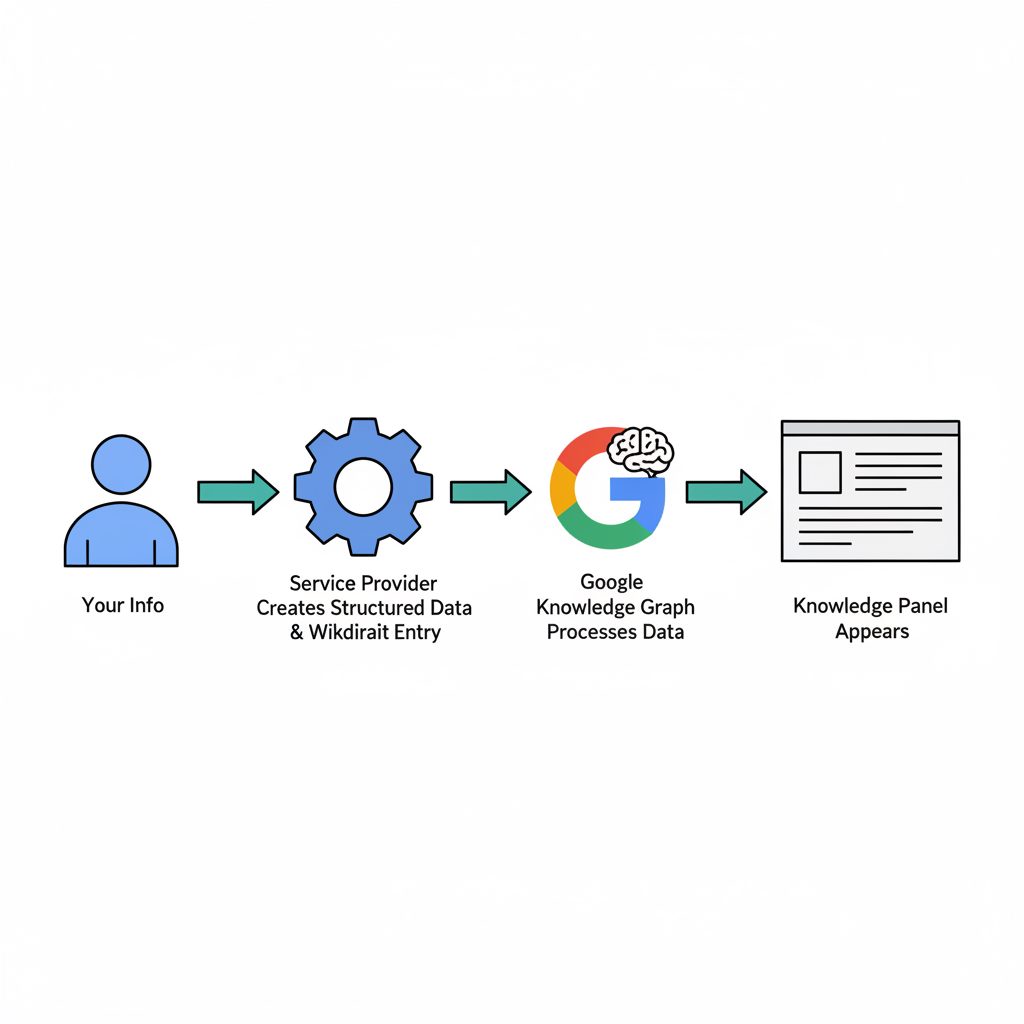
- Entity Creation in Data Hubs: They create an entry for you or your brand in a trusted, public database. For a person or general brand, this is often Wikidata. For a musician, it might be MusicBrainz. These act as authoritative sources.
- Structured Data (Schema): They ensure your official website uses specific
Schema.orgmarkup. This code explicitly tells search engines details like "this is the official site for this person" or "this person is a public figure." - Linking and Consolidation: The service links these new data points together. For example, the Wikidata entry will link to your official website, and your website's schema will link back to the Wikidata entry. This creates a consistent, cross-referenced profile that Google's crawlers can easily understand.
Essentially, you are paying for the technical labor to organize your digital identity in a machine-readable format. Google's systems detect this clear, authoritative information and, in response, generate the panel.
Where DarkSMM Fits: A Direct Path to a Knowledge Panel
For individuals and brands needing to establish a clear digital identity, DarkSMM offers a direct service. The goal is to accelerate the creation of this foundational asset without needing to become an expert in structured data yourself.
Our Google Knowledge Panel service performs the technical data structuring and submission required to trigger a panel's creation. As of October 2024, the service is a flat $150. We create the necessary entries in authoritative databases and ensure the data is correctly formatted for Google's Knowledge Graph.
Our Knowledge Panel service is designed to create a professional first impression in search results. It is ideal for new artists, entrepreneurs, authors, and brands that lack an established panel. However, it is not a substitute for genuine, long-term reputation building. It also differs significantly from services like buying Instagram verification, which relies on demonstrating notability through press and media mentions, not just structured data.
How Should You Choose a Knowledge Panel Service?
Choosing a provider is the most critical step. The quality of their work directly determines if your panel appears and how long it lasts. Use these criteria to evaluate potential services.
| Criterion | Low-Quality Provider | High-Quality Provider |
|---|---|---|
| Method | Vague promises of a "secret sauce" or "Google contacts." | Transparently explains they use structured data, Wikidata, and other public data sources. |
| Data Sources | Uses spammy, low-authority wikis or private blog networks. | Leverages authoritative, globally recognized sources like Wikidata, MusicBrainz, or IMDb. |
| Revision Policy | Offers no support after creation. The panel may disappear with no recourse. | Provides guidance on claiming the panel and may offer services to help suggest edits post-creation. |
| Price | Suspiciously cheap (under $50) or excessively expensive (over $1,000). | Typically priced between $150 and $500, reflecting the expert labor involved. |
| Deliverable | May only provide a screenshot as "proof." | A live, verifiable panel in Google search results and instructions on how to claim it. |
What Red Flags Should You Watch For?
Choosing a provider in this market requires caution. Watch for these common red flags to avoid wasted money and potential harm to your online reputation.
- Guarantees of a "Permanent" Panel: No one can guarantee permanence. Google's algorithm is dynamic. A panel can be modified or removed if the underlying data signals weaken or if Google's policies change. A provider's job is to build it on a solid foundation, not promise it is indestructible.
- Claims of "Official Partnership with Google": This is always false. As stated in Google's own documentation, panels are generated automatically. There are no third-party companies certified by Google to create them. Any provider claiming a special relationship is being dishonest.
- Requiring Your Google Account Password: A provider never needs access to your personal Google account. The work is done on public databases and your own website. They should provide instructions for you to claim the panel yourself using your own account.
- Using Black-Hat SEO Tactics: Some providers may try to create a panel using spammy backlinks or keyword-stuffed articles on low-quality sites. This is a risky strategy that can backfire, potentially leading Google to penalize your website in search results.
According to brand SERP expert Jason Barnard, Google's understanding is based on "facts it has understood and is confident in." Spammy tactics create signals Google cannot trust., Kalicube, 2024
What Results Can You Expect from a Purchased Panel?
A successfully created panel is a powerful asset, but its initial form is often just a starting point. This is especially important as many search queries now end without a click. For example, a 2023 study found that 25.6% of all desktop searches are zero-click, meaning users get their answer directly from the results page.
Initial Appearance: The new panel will be basic. It will likely include the name, a subtitle (e.g., "Musician," "Author," "Public Figure"), and a primary photo. It may also pull a short description from a source like Wikipedia if one exists.
Claiming the Panel: This is your first and most important task. Once the panel is live, you will see an option to "Claim this knowledge panel." This process requires you to prove you are the official representative of the entity by logging into an associated account (like YouTube, Search Console, or Twitter).
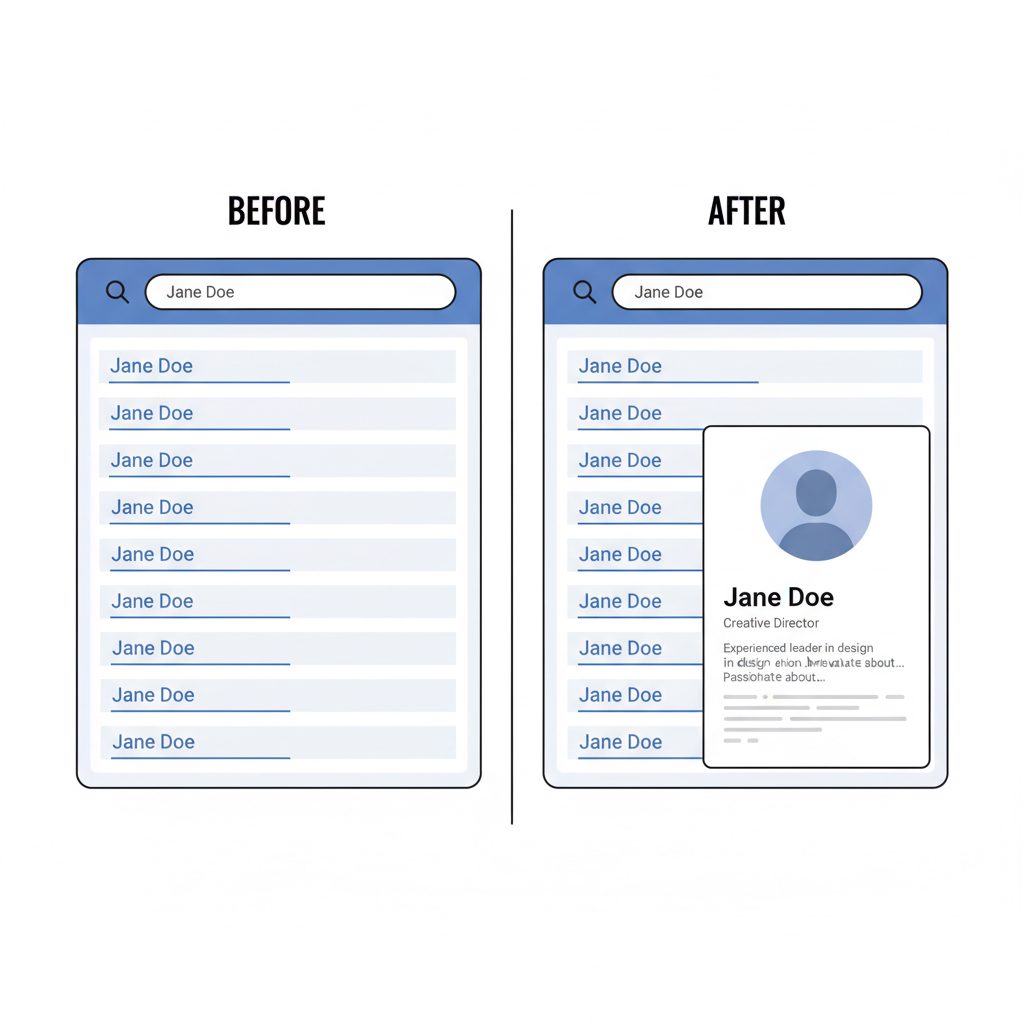
Information Control: Claiming the panel does not give you direct edit access. It gives you the ability to suggest edits. You can propose a new photo, add social media profile links, or correct factual inaccuracies. Google reviews these suggestions and uses them to update the panel, but retains final editorial control.
Longevity and Retention: The panel's stability depends on the quality of the initial setup and your ongoing digital activity. A panel built on strong sources like Wikidata is more stable. If you continue to build your digital footprint by getting mentioned in reputable publications and keeping your official website updated, the panel will become more stable and detailed over time.
A Simple First-Week Plan
Once you purchase a Knowledge Panel service, your work has just begun. Follow these steps to ensure a successful outcome.
- Provide Accurate Information: Your provider needs precise data. Give them the exact spelling of your name or brand, your official title or subtitle, a high-resolution primary photo, and links to your official website and social profiles. Consistency is critical.
- Monitor Search Results: After the provider's estimated delivery time, begin searching for your entity's name. Use an incognito window to see non-personalized results. The panel may appear at different times in different regions.
- Claim Your Panel Immediately: The moment you see the panel, click the "Claim this knowledge panel" link at the bottom. Follow the verification steps promptly. This is the key to managing your panel's information.
- Suggest Initial Edits: Once verified, your first action should be to suggest adding links to your key social media profiles and official website. If the description or photo is inaccurate, suggest changes. Refer to Google's official guide on how to update your knowledge panel for best practices.
- Build on the Foundation: The panel is not a one-time setup. Treat it as a living profile. Continue to produce content, seek media mentions, and keep your associated data sources (like your website's Schema and any Wikidata entries) current.
Frequently Asked Questions
How much does a Google Knowledge Panel cost?
Services to create a Google Knowledge Panel typically range from $150 to $500. The cost reflects the technical expertise and time required to structure data and create entries in authoritative databases. For reference, DarkSMM's service is a flat $150 as of October 2024.
Is buying a Google Knowledge Panel safe?
The primary risk is not to your account's safety but to your wallet. You might pay a provider who fails to deliver or who uses low-quality methods that result in the panel quickly disappearing. The key to safety is vetting the provider's methods and choosing one that uses transparent, sustainable techniques.
How long does it take to get a knowledge panel?
Timelines vary by provider and by how quickly Google's crawlers index the new information. It can take anywhere from a few days to several weeks. A reputable provider will give you a realistic estimate, but cannot guarantee an exact date due to their dependence on Google's systems.
Can my knowledge panel be removed?
Yes. Google can and does remove knowledge panels. This can happen if the entity is no longer deemed notable, if the information is found to be based on spam or inaccurate sources, or as part of a broader algorithm update. A panel built on a solid, factual foundation is much less likely to be removed.
What's the difference between a Knowledge Panel and a Google Business Profile?
A Knowledge Panel is an encyclopedic entry for a notable entity like a person, brand, or creative work. A Google Business Profile (formerly Google My Business) is a directory listing for a local business, featuring maps, hours, and customer reviews. They appear similar but serve entirely different functions, as explained in Google's Business Profile overview.
Can I edit my own knowledge panel?
After you successfully claim your panel, you can suggest edits to Google. You cannot edit it directly like a social media profile. Google reviews all suggestions for accuracy and is not required to accept them. The panel's content is ultimately determined by Google's algorithm based on public information.